The real cost of a fashion photoshoot in 2026
The day rate is the smallest part of the bill. Here's the true, all-in cost of an on-model image in 2026 — and what changes when the shoot disappears.
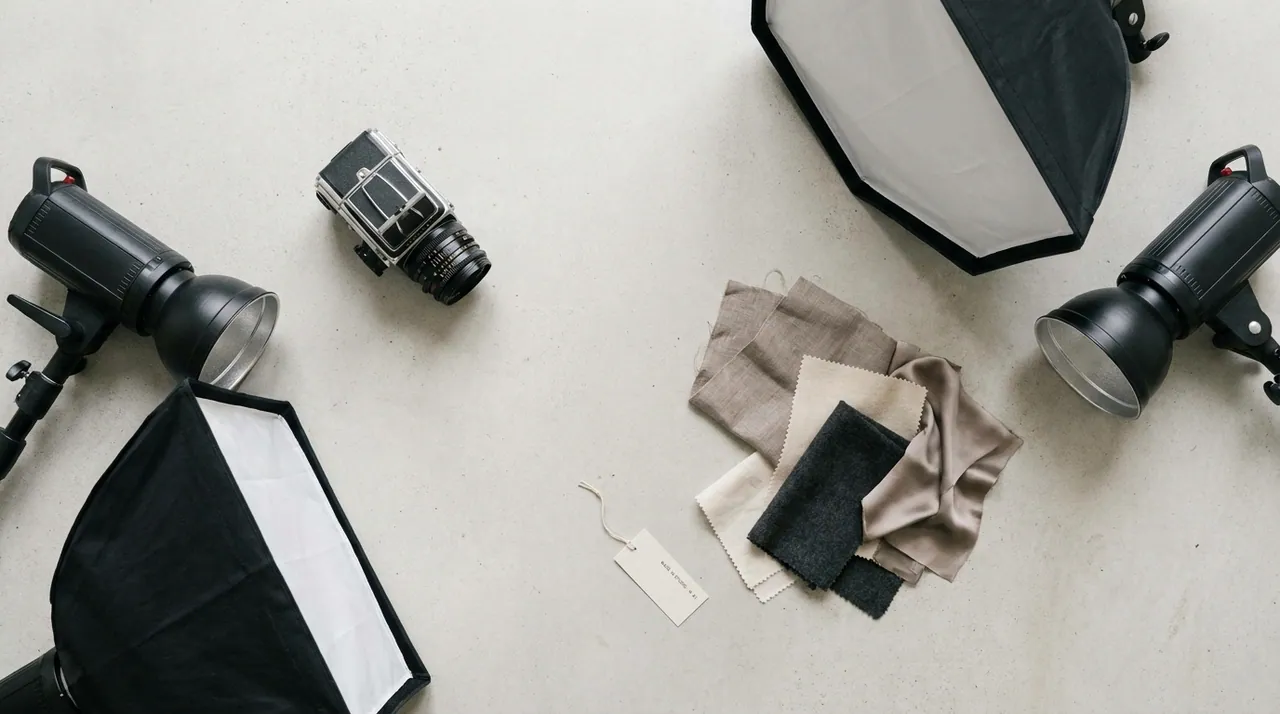
Ask a founder what a product photo costs and you'll usually hear the day rate. That number — the invoice from the studio — is the smallest part of the real figure. The cost of a fashion photoshoot is everything that has to line up around that one day, and in 2026 most of it is still priced like it's 2015.
Here's how the true, all-in cost actually breaks down — and why the per-image number lands close to $45 once you count everything.
What you actually pay for
A single on-model image is the output of a supply chain, not a click:
- Models — day rates plus agency fees, and usage licensing that expires.
- Photographer & assistant — the shoot itself, plus setup and teardown.
- Studio — space, lighting, backdrops, sometimes a location permit.
- Styling & glam — stylist, hair, makeup, steaming, returns.
- Sample logistics — pulling, shipping, tracking and sending back every SKU.
- Retouching — color, cleanup, ghost-mannequin compositing, per image.
- Coordination — the producer hours nobody itemizes.
Divide a realistic shoot day across the number of usable, retouched, on-model frames you actually ship, and the all-in cost per image lands around $45. Not the day rate — the finished asset.
The costs that never hit the invoice
Two multipliers quietly dominate the budget.
Time. From brief to publish-ready assets is typically 3–6 weeks — booking, shooting, selecting, retouching, revision rounds. A weather delay, a sick model, a late sample, and the calendar moves again. For a brand that drops monthly, the shoot is almost always the bottleneck.
Reshoots. A color that reads wrong, a fit that puckers, a background that doesn't match the season — and you pay the whole chain a second time. Reshoots aren't the exception; for most catalogs they're a line item you learn to expect.
The expensive part of a photoshoot was never the camera. It was everyone and everything the camera needed to be pointed at.
What changes in 2026
On-model imagery no longer requires the shoot. A clean flat product shot becomes photoreal on-model imagery in under 15 seconds — you pick the model, the pose and the light, and generate. The economics invert:
- ~98% lower cost than a traditional shoot.
- Effective cost from ~$0.20 per image.
- Turnaround from 3–6 weeks to under 15 seconds.
The line items above don't get cheaper. They disappear. No agency booking, no studio day, no sample shipping, no retouch queue.
What you keep — and what you let go
You keep control of the things that matter: the model, the pose, the framing, the backdrop, the light. You keep 4K exports with clean masks, ready for the PDP and paid social. And you keep the rights — you own every image, with no model releases, no licensing windows and no royalties to track.
What you let go of is the coordination tax: the calendar, the logistics, the reshoot anxiety. For most teams that isn't a downgrade — it's the first time image production moves at the speed of the rest of the business.
How to think about the switch
You don't have to choose all-or-nothing. The pragmatic pattern in 2026 is hybrid:
- Keep the hero shoot for a campaign's signature few images, if the brand story needs it.
- Generate the long tail — every colorway, every SKU, every marketplace variant — where a shoot never penciled out anyway.
- Reallocate the budget from volume to ideas: art direction, styling concepts, the two shots that actually build the brand.
Run the math on your own catalog. Take last quarter's image count, multiply by $45, and compare it to the same volume at roughly $0.20 each. The gap is rarely a rounding error — it's usually the difference between shooting your bestsellers and shooting your whole catalog.
The photoshoot isn't going away. The tax around it is.
More field notes
Turn your next flat shot into on-model imagery.
Start free — 10 images, no card. See what a shoot-free catalog actually looks like.